April News and Updates
Sexual Assault Awareness Month
Talking about abuse can be difficult for those who have experienced it. Survivors may have strong physical and emotional reactions when addressing this topic. If you are a survivor, spend some time seeking support before you have these discussions. Talk to a counselor, practice coping strategies (like meditation or grounding exercises)—whatever helps you protect your mental and physical health.
Sexual assault is too common an experience: 1 in 4 women and 1 in 7 men will experience sexual assault in their lifetimes. Preventing sexual assault requires all of us: holding others and ourselves accountable, showing up for survivors, and being in solidarity with those whose experiences may be different than ours.
Sexual Assault Awareness Month is an opportunity to listen to and honor survivors in our community and show those impacted by sexual violence that they are not alone. We also invite you to learn more about the Office for the Prevention of Domestic Violence through their technology-facilitated sexual violence quiz and get involved with our awareness campaign!
Foundations for Resilience
Park City Library
In Person, starting on Monday April 6th, from 5:30-7pm

Peace House presents Foundations for Resilience, a four-week series offering a safe space for survivors of sexual trauma to practice foundational skills. This educational, drop-in group allows participants to attend any or all sessions based on their interest. Join us to build resilience and self-compassion, while gaining practical tools for healing in a welcoming community.
Our first series for 2026 will take place at the Park City Library starting on Monday April 6th 5:30- 7pm and continue at the same time and place on 4/13, 4/20 and 4/27. Registration not required.

Why join? Previous attendees reported that they benefitted from being in a safe space in community with other survivors; that they gained practical skills to cope with emotions related to past trauma and that the series helped them recognize  the strengths they already had.
Child Abuse Awareness
Evidence shows that children’s early experiences impact them throughout life, both positively and negatively. Kids raised in safe, stable, and nurturing relationships and environments are more likely to enjoy good physical and mental health plus succeed academically and socially. Children who grow up happy and healthy also go on to contribute to economic prosperity for everyone. Child abuse and neglect prevention is possible.
Creating safe, stable, nurturing relationships and environments is essential for helping children and families thrive. These relationships and environments also help protect children against or lessen the negative effects of violence.

- Safety: extent to which a child is free from fear and secure from physical or psychological harm within their social and physical environment.
- Stability: degree of predictability and consistency in a child's social, emotional, and physical environment.
- Nurturing: extent to which a child's physical, emotional, and developmental needs are sensitively and consistently met.
Everyone has a role to play in preventing child abuse and neglect as well as helping all children reach their full potential.Prevention
Young children experience the world through their relationships with parents and other caregivers. The quality of these relationships and the environment in which they develop, play a significant role in a child's development. Parents and caregivers can:
Set aside time each day to talk or play with your child. Establish routines. Children feel secure when the environment is structured for them. Validate your child's feelings and offer physical and emotional support. Know who is supervising your child when they're outside your home. Teach your child how to stay safe when they're online or on digital devices. Seek parenting skill training programs to help build stronger relationships with your children. Raising children can be challenging—ask for help when needed. Reach out to babysitters, family members, or close friends. Discuss your concerns with your child's doctor. Also consider finding out if your community offers support groups or programs for parents and caregivers. Abuse prevention should not be a conversation that happens once. Instead of “The Talk,” adults could have regular micro-talks with kids about these issues. Take the opportunity to talk about this topic a few times during SAAM (Sexual Assault Awareness Month).

This strategy lets kids know that body boundaries and safety are ongoing topics, not a one-and-done scary or awkward talk with adults. It also opens the door for future conversations, which could include disclosures. When kids know it’s OK to ask questions and that their thoughts and feelings are important, they are more likely to come to you when they have a concern. Regular conversations also help adults work through some of their nerves when talking about abuse. Remember, this is prevention in practice. The more often you talk about it, the more comfortable you (and your kids) will be.Spring Luncheon
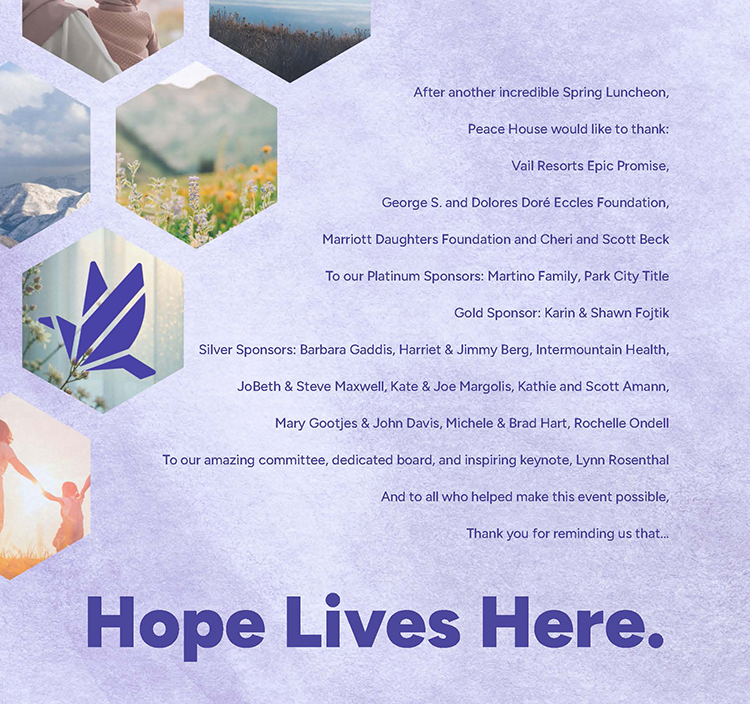
Another amazing Spring Luncheon is in the books! What an exceptional keynote by this year's speaker, Lynn Rosenthal.
We are so thrilled to have the support of local and national partners such as Vail Resorts Epic Promise Foundation and Park City Mountain, and many more.
Mark your calendars for March 18, 2027. We'll see you there!